Conventional turf was never designed for a semi-arid climate like ours. Grass demands consistent, heavy watering to stay green, and even then it often browns out during peak summer heat or gets stressed by watering restrictions during drought years. According to the U.S. Environmental Protection Agency's WaterSense program, landscapes built with region appropriate, water efficient plants use 20 to 50 percent less outdoor water than traditional turf heavy yards. That difference shows up fast, both in a lower monthly water bill and in a yard that still looks good in September instead of patchy and stressed.
Drought-Tolerant Landscaping in Los Angeles
Tired of Watching Your Yard Die Every Summer?
If you have spent another August watching your lawn turn brown despite constant watering, or opened your water bill and winced, you are not alone. Los Angeles's long dry summers put enormous stress on traditional turf, and no amount of irrigation seems to keep a conventional lawn looking healthy through the hottest months. Drought-tolerant landscaping from Los Angeles Xeriscape solves this problem directly, replacing high-maintenance, water-hungry lawns with resilient plantings that actually thrive in our climate instead of merely surviving it.
Why Traditional Lawns Struggle Here

Get a Free Quote
Contact Us
Xeriscape Los Angeles
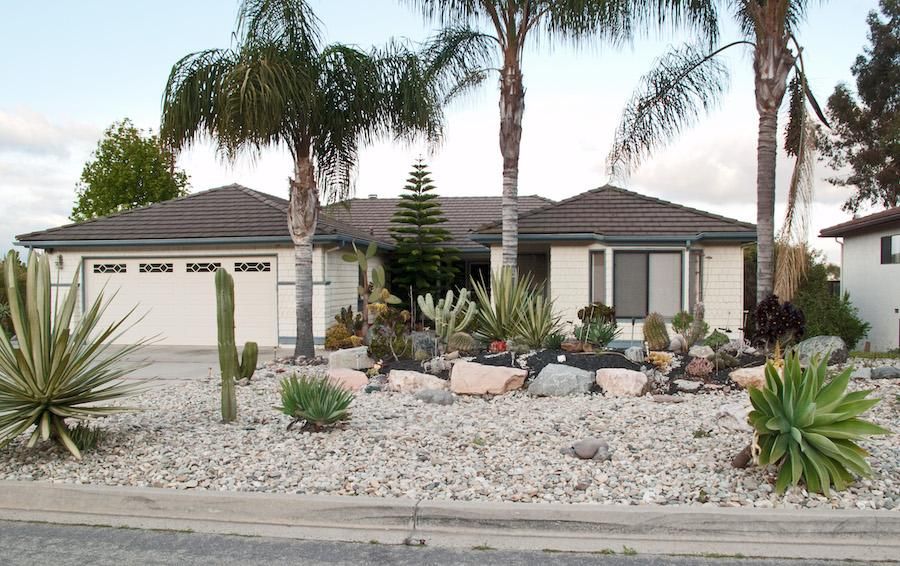
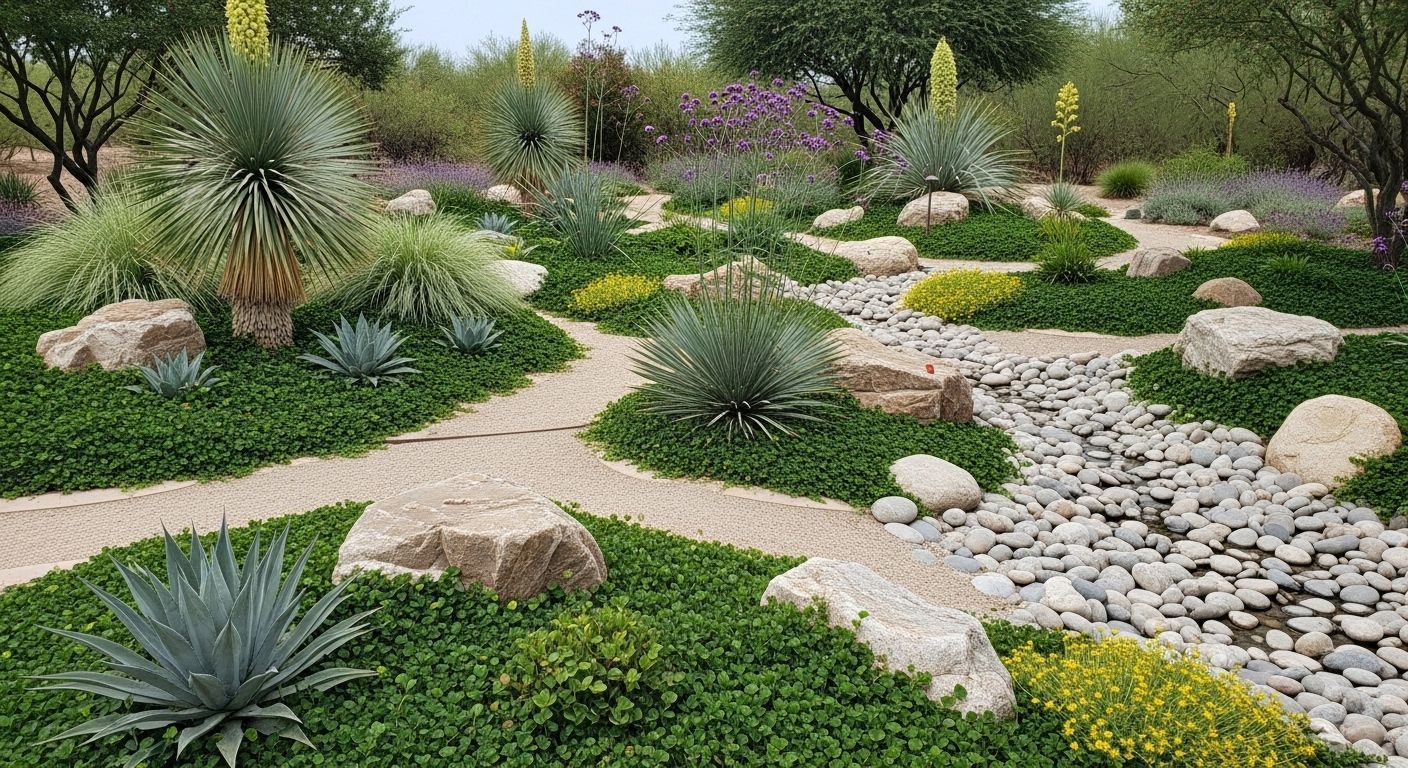
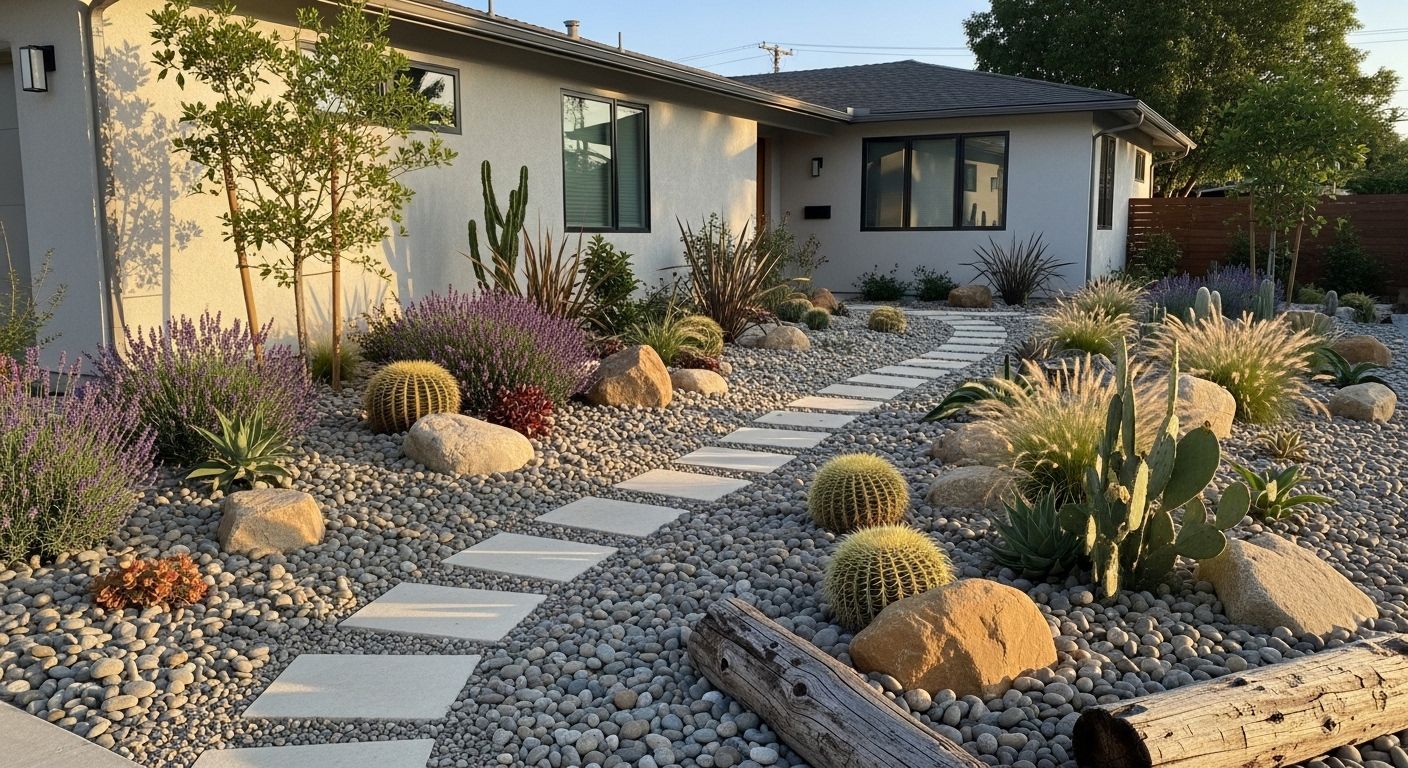
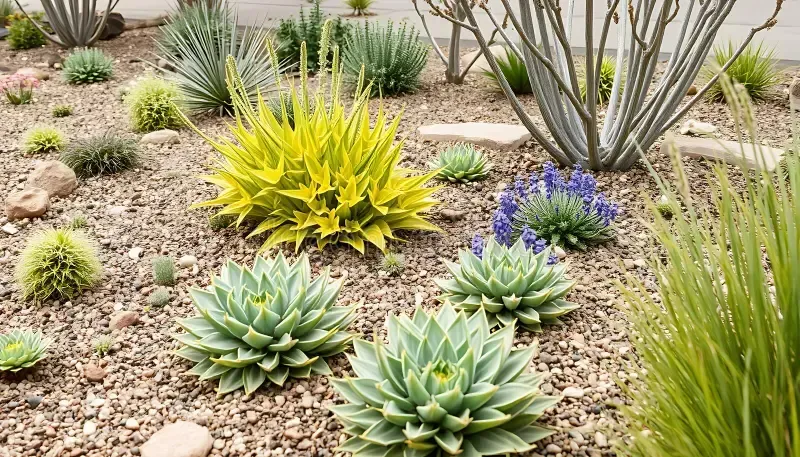
Satisfied Clients


Plants That Actually Belong Here
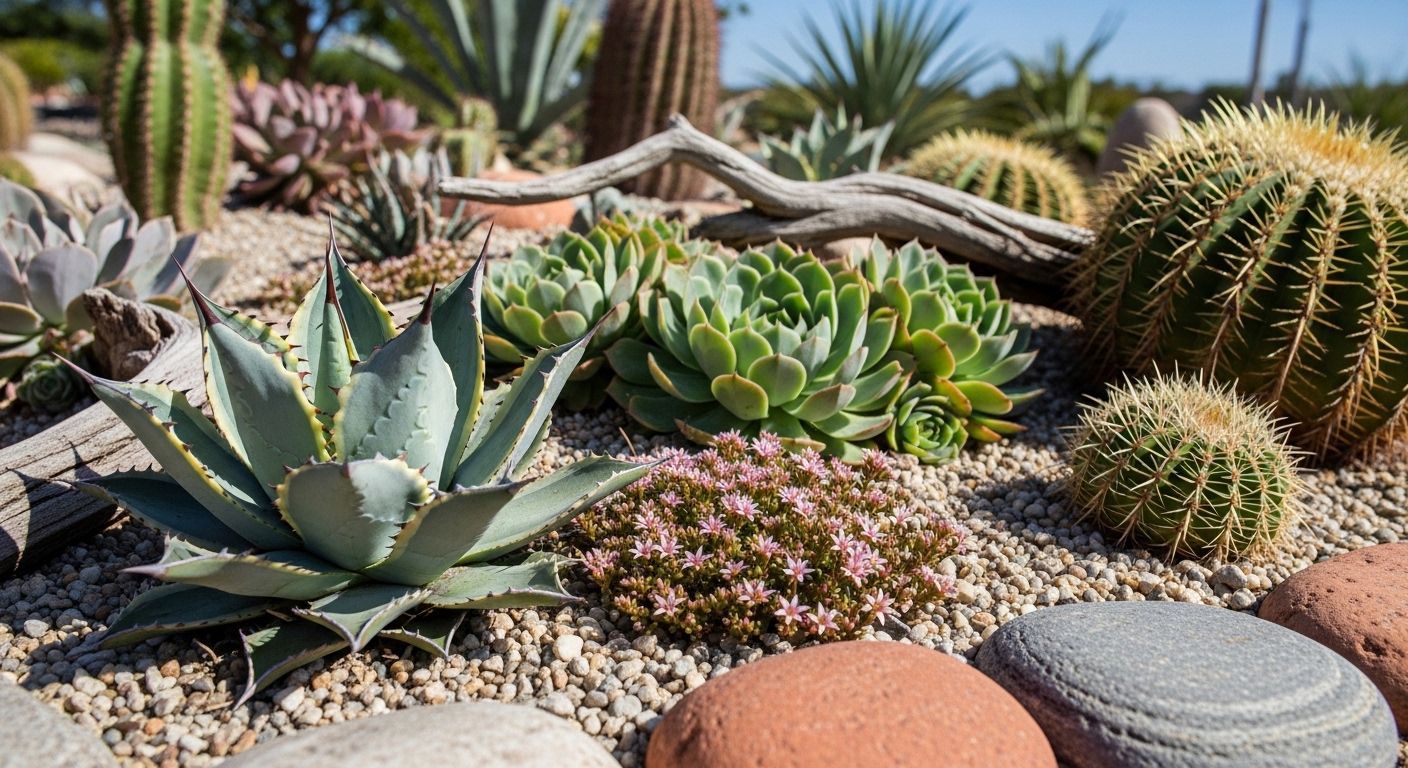
A well designed drought-tolerant landscape draws from an entirely different plant palette than a traditional yard, one built around species that have adapted to dry summers and irregular rainfall. We frequently work with California native and adapted landscape plants, including flowering perennials, ornamental grasses, and hardy shrubs that provide structure and seasonal color without demanding constant water. Groundcovers play a major role too, filling in bare soil, suppressing weeds, and reducing erosion while requiring a fraction of the water a lawn needs. Many of these lawn alternatives also cut down dramatically on mowing, giving homeowners back their weekends along with lower bills.
Soil Amendment Sets the Foundation
Drought-tolerant plants perform best when the soil underneath them is prepared properly. We amend soil before planting to improve drainage and structure, since many drought-tolerant species actually struggle in soil that holds too much moisture rather than too little. Poor draining, compacted soil is one of the most common reasons new plantings fail, and proper amendment upfront prevents that problem before it starts.
Deep-Root Watering for Long-Term Resilience
Once plants are in the ground, how you water matters just as much as what you plant. We design and recommend deep-root watering strategies that encourage roots to grow downward in search of moisture, rather than staying shallow and dependent on frequent surface watering. Over time, this builds genuinely drought-resilient plants capable of handling extended dry spells with minimal supplemental irrigation, a stark contrast to turf that needs watering multiple times a week just to survive.
Beautiful Through Every Season, Not Just Spring
One of the biggest misconceptions about drought-tolerant landscaping is that it sacrifices beauty for practicality. In reality, a well planned design stays visually interesting across the entire year, layering bloom times, textures, and structural plants so there is always something happening in the landscape. Research from the Xerces Society and multiple university extension programs has found that established native and drought tolerant plantings can also reduce fertilizer and pesticide needs by up to 60 percent, meaning less chemical input and less time spent on upkeep, not just less watering.
Xeriscaping Near Me?
Ready to Stop Fighting Your Lawn?
If you are frustrated with a thirsty, high-maintenance lawn that never seems to look right no matter how much time and water you put into it, drought-tolerant landscaping offers a genuine solution. Reach out to Los Angeles Xeriscape today to schedule a consultation, and let us help you build a yard that actually thrives in our climate instead of fighting it.